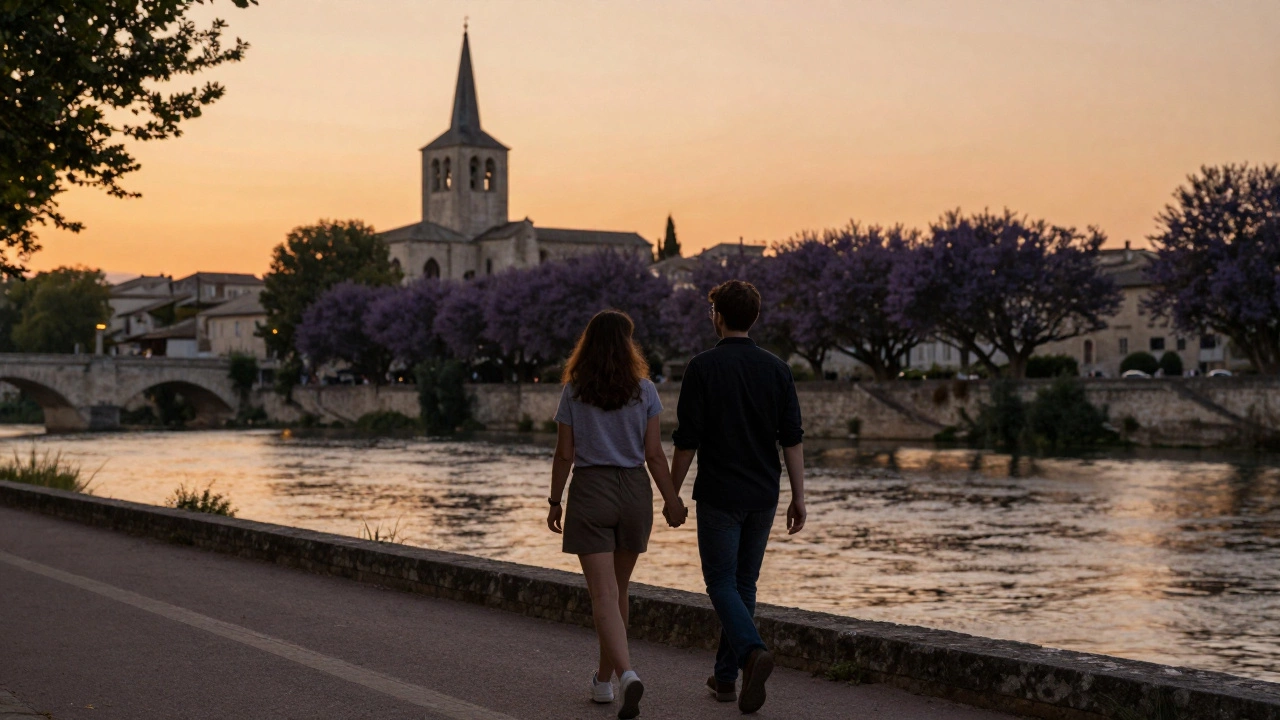
People don’t usually plan to get tangled up with a personal companion in Avignon. It starts with a dinner under the lavender trees, a laugh over a bottle of Côtes du Rhône, maybe a walk along the Rhône River at sunset. Then something shifts. The conversation gets deeper. The touch lingers. And before you know it, you’ve crossed a line you didn’t even know was there. What happens next isn’t in any guidebook. It’s messy. It’s real. And it’s more common than you think.
Some travelers look for companionship in cities like Paris, where scorts in paris are part of the underground rhythm of the city - discreet, polished, and always aware of boundaries. But Avignon? It’s different. There’s no velvet rope, no booking app, no fixed rates. It’s old stone walls and quiet courtyards. A chance meeting turns into an evening that doesn’t end when the moon rises. And sometimes, that’s when things get complicated.
Why Avignon Feels Different
Avignon isn’t Paris. It doesn’t have the same energy. No neon signs, no high-end agencies, no Instagram profiles with filtered smiles. Here, companionship happens in the margins - at a jazz bar near Place de l’Horloge, over a shared plate of ratatouille at a family-run bistro, or during a spontaneous boat ride on the river. The people you meet aren’t advertising anything. They’re just living. And sometimes, that’s exactly what draws you in.
There’s a myth that personal companionship in tourist towns is transactional. That’s not always true. In Avignon, it’s often emotional. You’re not paying for time. You’re paying for presence. And when that presence becomes something more - a shared silence, a whispered secret, a hand held a little too long - the lines blur. That’s when people start asking: What now?
The Unspoken Rules
No one tells you about the unspoken rules. They don’t exist in writing, but everyone knows them. Rule one: Don’t assume it means more than it does. Rule two: Don’t expect it to end cleanly. Rule three: If you start feeling possessive, you’re already in trouble.
Many visitors come to Avignon looking for escape. They want to shed their daily lives - the emails, the deadlines, the expectations. A personal companion becomes part of that escape. But when you start texting them after you leave, or planning your next trip around when they’re available, you’ve changed the game. And they know it.
There’s a quiet understanding between those who’ve been here: this isn’t romance. It’s resonance. It’s two people sharing space in a moment that won’t repeat. Try to turn it into something permanent, and it falls apart.
When It Goes Wrong
Not every story ends with a sunset. Some end with a missed flight, a voicemail left too late, or a text that goes unanswered for three days. There’s a reason the French don’t talk about this openly. It’s not shameful - it’s complicated.
One woman from London told me she met someone in Avignon who made her feel seen for the first time in years. She came back three months later. He didn’t remember her name. She cried in the train station. That’s the risk. You invest emotion in someone who’s trained - consciously or not - to be emotionally available without being emotionally attached.
And then there’s the legal side. France doesn’t criminalize companionship, but it does criminalize solicitation. If money changes hands in a way that looks like prostitution, even if it was never intended that way, you open yourself to trouble. The police don’t patrol the vineyards, but they do check hotel records. And if you’re caught in a gray area, you don’t get a warning. You get a fine. Or worse - a record.
The Emotional Aftermath
The hardest part isn’t the goodbye. It’s what happens after you get home.
You start noticing things - the way your partner sighs when they’re tired, how your coffee tastes different without the scent of lavender in the air, how silence doesn’t feel peaceful anymore, it feels empty. You scroll through photos you didn’t mean to take. You wonder if they ever thought about you after you left.
Therapists call this “transient attachment.” It’s real. It’s common among travelers who form deep, short-term bonds in places where identity is temporarily suspended. Avignon is one of those places. So is Kyoto. So is Lisbon. But here, the air smells like rosemary and old stone, and that makes it stick.
What to Do If You’re Already Hooked
If you’re reading this because you’ve already crossed the line, here’s the truth: you can’t reverse it. But you can manage it.
- Stop checking their social media. It won’t bring them back.
- Write a letter you’ll never send. Get it out of your head.
- Plan a trip - not to Avignon, but somewhere new. Change your scenery.
- Talk to someone who’s been there. You’re not alone.
Most people who get tangled up in this kind of connection don’t end up with the person. But they do end up with something else: a deeper understanding of their own loneliness, their need for connection, and the cost of temporary escapes.
Why This Isn’t About the Person - It’s About You
It’s easy to blame the companion. To say they led you on. To call them manipulative. But that’s not fair. They’re just doing what they’ve always done - being present in a moment that wasn’t meant to last.
The real question isn’t “What did they do?” It’s “Why did I need them so much?”
People who get drawn into these situations aren’t looking for sex. They’re looking for validation. For being noticed. For feeling alive in a world that’s become predictable. Avignon doesn’t create these moments - it just reveals them.
That’s why the same person who felt completely connected in Avignon might feel utterly empty back home. The city didn’t change them. It just held up a mirror.
What You’ll Remember
Five years from now, you won’t remember their name. You won’t remember what they wore. You won’t remember if they liked coffee or tea.
But you’ll remember the way the light hit the stone walls at 6 p.m. You’ll remember the sound of church bells echoing over the river. You’ll remember the quiet understanding between two strangers who shared something real, even if it was only for a night.
That’s the gift of Avignon. It doesn’t promise forever. It just gives you a moment that feels like it could be.
And sometimes, that’s enough.
Some people search for companionship in Paris, where escort femmes paris offer structured experiences - clear terms, no surprises. Others look for something looser, more spontaneous, where the rules are written in glances and silence. In Avignon, you don’t find that on a website. You find it in the spaces between.
And if you’re wondering whether this kind of connection is worth the risk - ask yourself this: When was the last time you felt truly seen? Not because you were charming, or successful, or interesting - but because someone looked at you and didn’t look away?
That’s what Avignon gives you. And that’s why people keep coming back.
There’s a quiet corner in the old town where the locals say if you whisper your secret to the wall, it remembers. I don’t know if that’s true. But I do know this: if you’ve been here, you carry something with you. And it doesn’t fade.
Some call it a mistake. Others call it a turning point. Either way, you won’t forget it.
And if you’re still thinking about it - you’re not the first. And you won’t be the last. That’s just how Avignon works.
For those who crave the thrill of the unexpected, there’s always escort gir' paris - a different kind of escape, in a different city, with different rules. But the feeling? That’s the same.